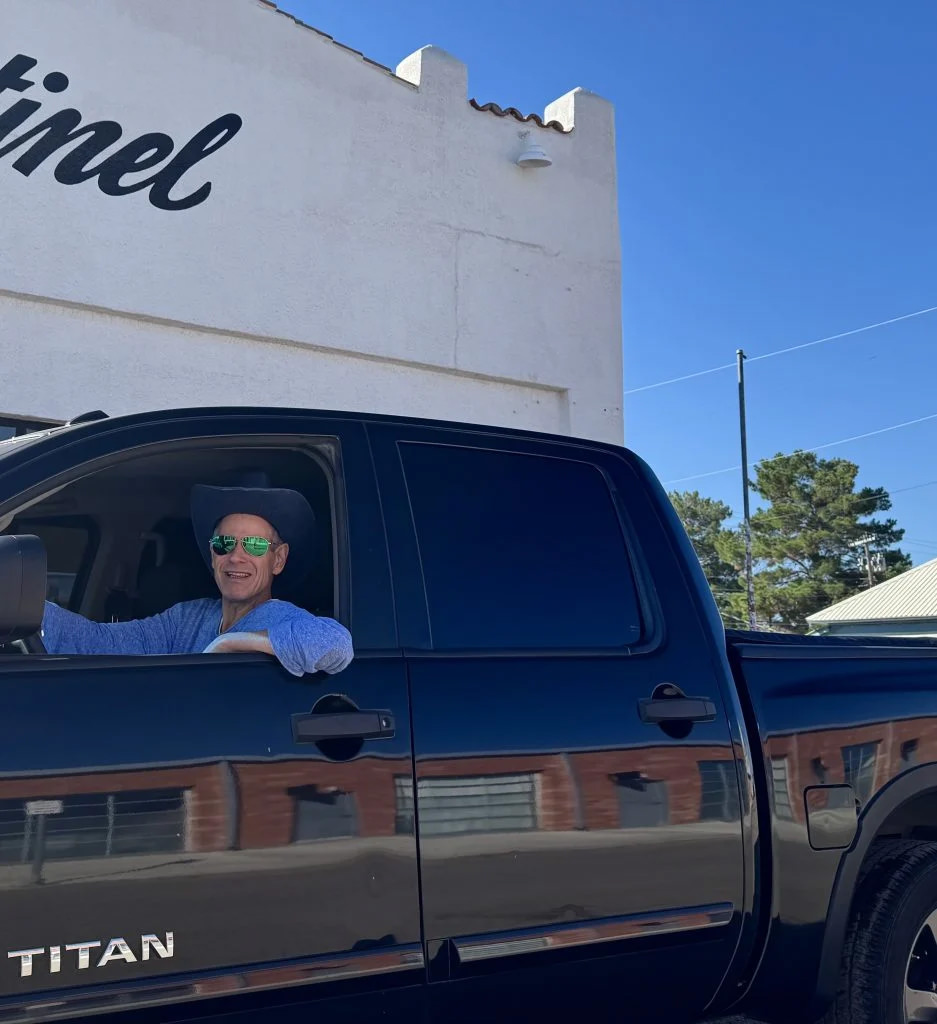
My failing car was replaced by a faltering truck. I think it suits me, though, and it would be useful in the mean, potholed streets of NYC.
September 29: An auspicious start, broken down beside the highway, beginning my version of Pee-wee’s Big Adventure.
I rented the only manual car (within reason, price-wise) in the state of Texas from Turo, the peer-to-peer car-sharing company, for my two-week writing, art, and design exhibition/residency in Marfa, under the auspices of the Big Bend Sentinel newspaper. If I’m not preoccupied shifting gears, my mind has a tendency to wander (more so than usual), and I’m a bad enough driver as it is.
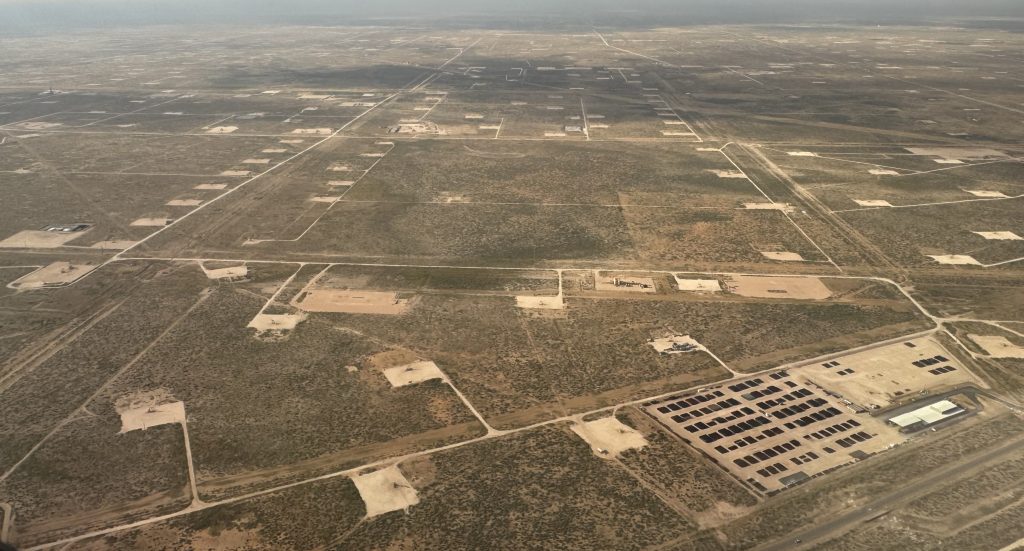
Flying into Midland, three hours away from Marfa, like every airport seemingly is…
I am beginning to think the earth might very well be flat. And very brown.
Barely out of the Midland International Air & Space Port parking lot, the “check engine” light began flickering. My rental car was in the midst of a mechanical failure. Not long after, I found myself stranded by the side of the highway for hours. When I phoned the car’s owner requesting a search and rescue (OK, demanding a search and rescue), he chastised me for renting such an old car, his very own 2014 Toyota Corolla with 167,000 miles.
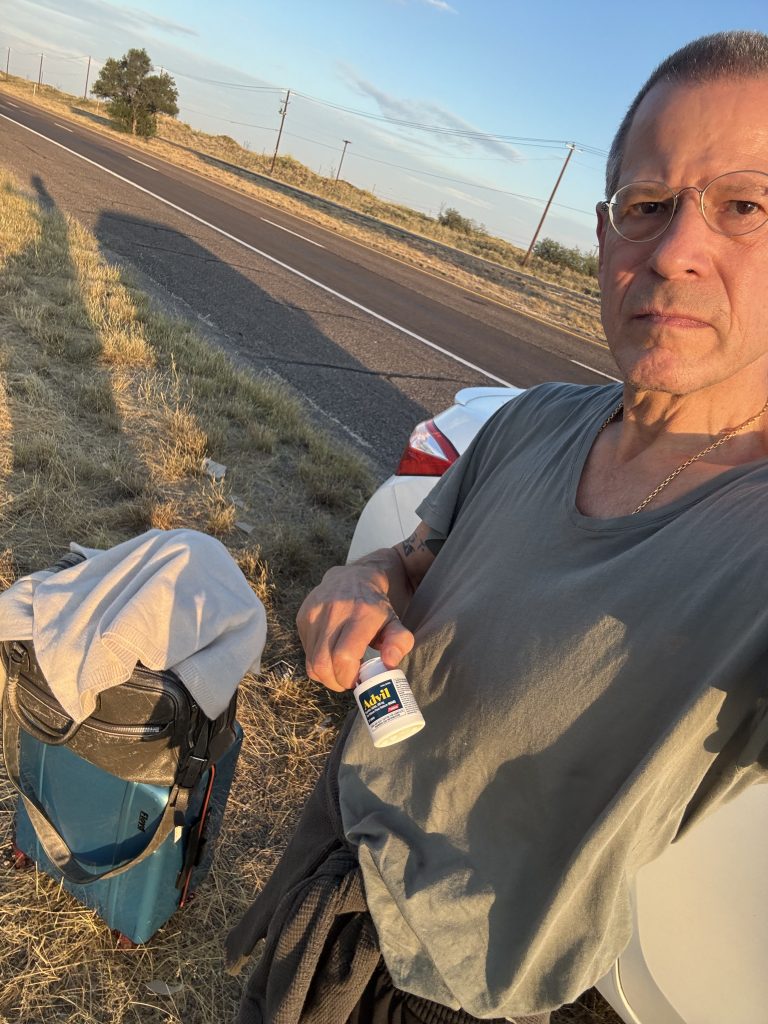
S.O.S. Send help… fast! My disabled rental car failed me not long into the three-hour trip from Midland airpot; thankfully I came prepared for just such an occurrence with an ample supply of ibuprofen.
I was finally found, and my vehicle was replaced with an old pick-up truck that wasn’t in much better condition (157,000 miles). After the switch, I hunkered down for a very fast three-hour drive. (Every airport in the region is at least as far from Marfa.) When I finally arrived, I was swiftly installed as the newest cub reporter on the art beat at the paper, which was founded in 1926.
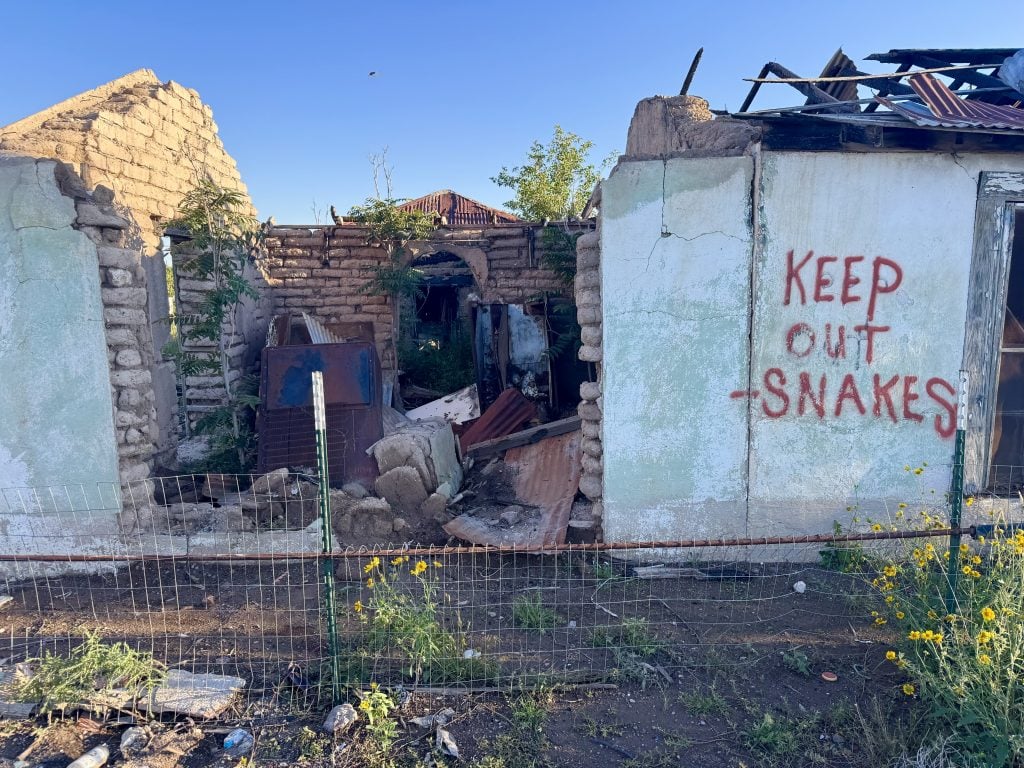
They might consider hanging similar such signs outside NYC auction houses and the mega galleries dotting the globe. Maybe I will, upon my return, shhh…
October 1: A brief introduction as to why, exactly, I am here.
Before artist-writer-designer-architect-developer Donald Judd (I’m jealous of his multiple multi-hyphenates) staked his claim to a remote (to put it mildly) old U.S. cavalry fort, established in 1911 to defend against incursions from across the border, and smuggling in both directions during the Mexican Revolution, Marfa was most famous for its association with the 1956 film Giant, starring Elizabeth Taylor, James Dean, and Rock Hudson, which was filmed in the area. (The base of operations for the cast and crew was the town’s historic Hotel Paisano, which is still running.)
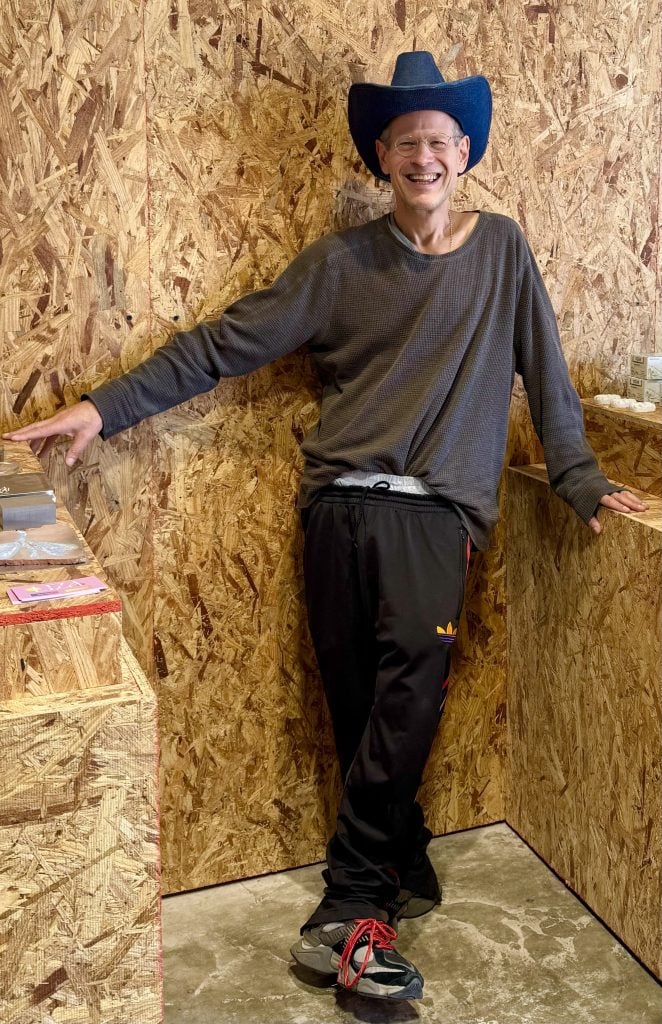
When in Marfa… I picked up this denim beauty from the ethical cowboy shop across the street from the Sentinel, go check it out! The sun is so strong, this is no mere fashion accessory (but that, too).
Judd started purchasing what eventually numbered 22 buildings in the early 1970s, and began construction on his projects in 1979 in collaboration with the Dia Art Foundation; his Chinati Foundation opened to the public in 1986. Following his death in 1994, his estate established a parallel institution, the Judd Foundation. The town has become a mecca for art, design, and architecture over the years. Hundreds of thousands have made the pilgrimage, and a number of them have remained.
The basis of my project in Juddville, entitled POSTBOX, is a lone sculpture, a few photos, and some furniture I designed—a desk and chairs—in the reductive language of the master maestro of minimalism himself. My installation, by choice, was plopped down smack in the middle of the bustling Sentinel café (a former funeral home and country music venue), where I’ve ubiquitously set up camp, like an ornament on the hood of an old car, writing in real time.
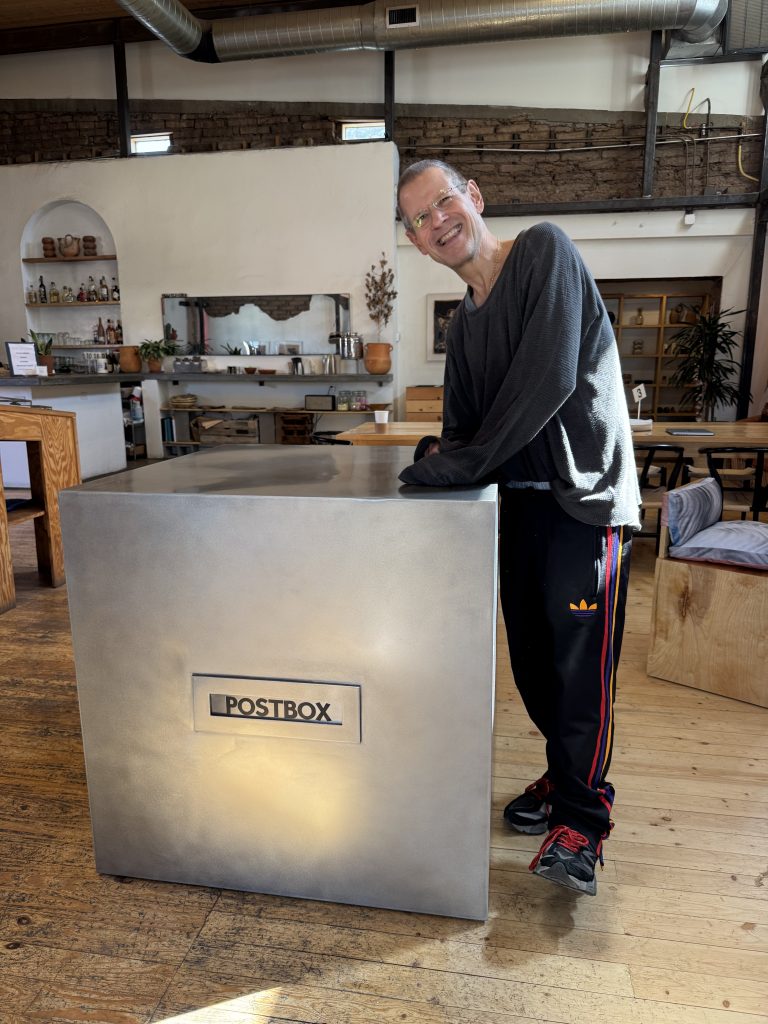
POSTBOX, my formal, yet satirical, take on the perfect fabricated cube that is equipped with a functional mail flap, though the sculpture has no access should anyone send a message to Judd.
The idea was to actively engage with the residents over two weeks, assimilating into the landscape and documenting the process, as opposed to parachuting in for a few days and making a hasty retreat after sucking in a dose of Judds. The disparate group of people I met included only a smattering of artists, contrary to my expectations, but that may change during the Chinati Weekend and gala, which begins today and runs through Sunday.
An enterprising developer from Houston with some previous art exposure, Tim Crowley, opened the art-infused hotel I stayed in (before checking into an Airbnb), as well as the neighborhood theatre and a small artist/fashion studio building. Surprisingly, Tim informed me that the majority of visitors don’t make the trek for art, but instead for the vast parks and the nearby McDonald Observatory. Oddly enough, Marfa is also a major wedding destination. May as well formalize your marital relationship in the desolate wilderness before you end up in an emotional one. I’m kidding.
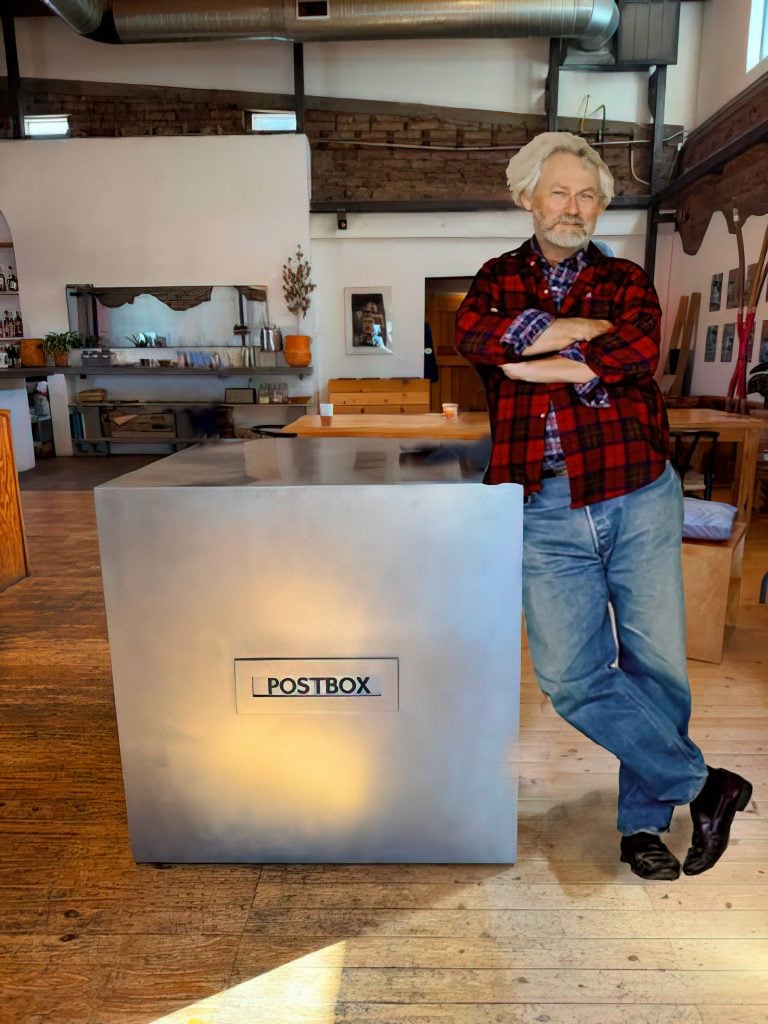
My POSTBOX sculpture is a formal homage to Judd, albeit with a satirical slant. There is a functional mail slot on one side of the three-foot-square stainless-steel cube. Nevertheless, nothing that goes in—whether notes from devotees seeking to commune with the divine presence that some believe Judd to be or detritus from the café—can be retrieved. The cube requires a bevy of brawn to move, as it weighs as much as a typical Judd (i.e. a lot).
Typical of my encounters tapping away at my table, I met an amiable elder artist with an unforeseen connection to my piece: he hails from a family of multiple generations of mail carriers.
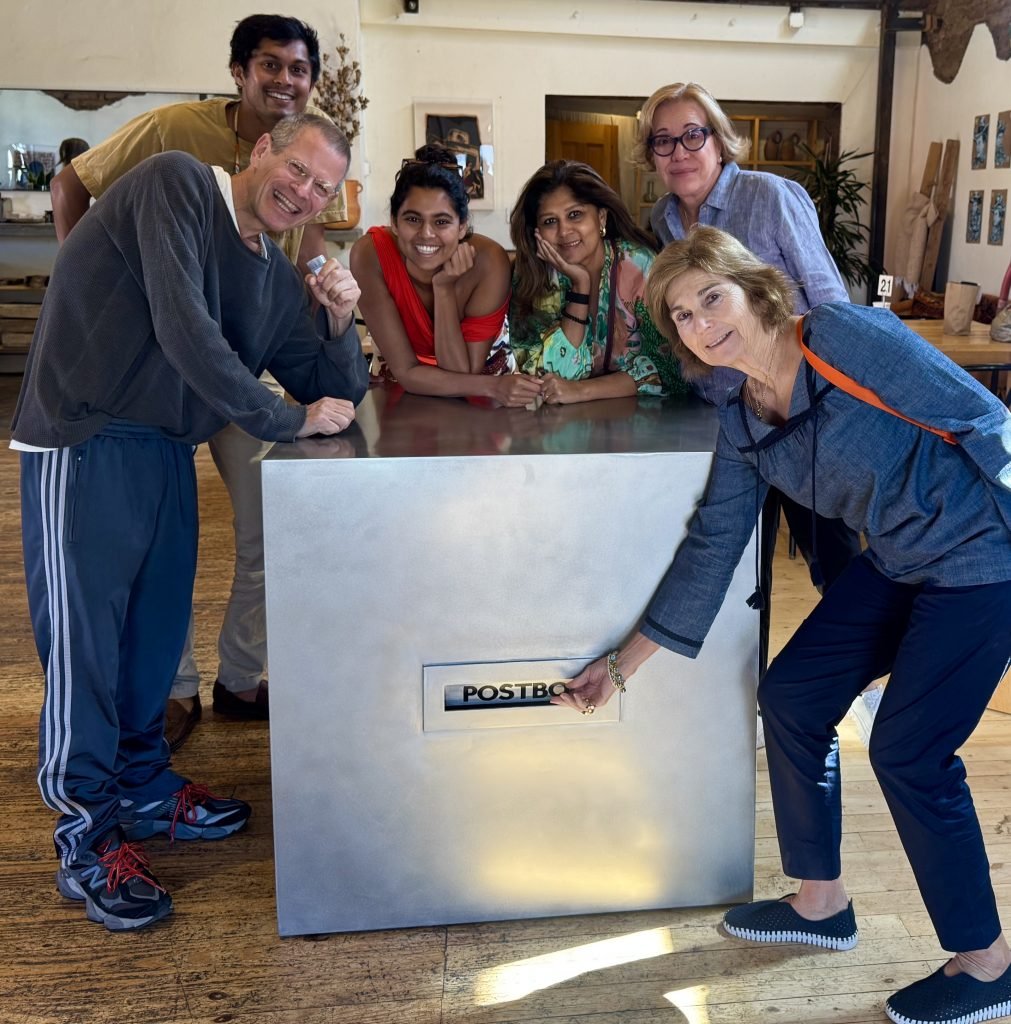
My new Marfa crew baring down on my sculpture/enchilada stand/human pedestal, featuring Rohan and Ruhi Kamdar and their mom, Punita. M. Olivia Pall (who happens to be mom of Alex of legendary EDM duo the Chainsmokers) and Elaine Clark, of the New York charity Common Pantry.
My stint here got off to a particularly embarrassing start that I’ll blame on the stereotype that Americans possess a notoriously poor sense of geography, rather than my own intellectual shortcomings (there are far too many to note). When Tim Johnson, the proprietor of the Marfa Book Co., introduced himself, he caught me in the middle of studying a grade-school color-coded map of the U.S. to determine where on earth I was.
Tim was described as “a poet, editor, small-town flaneur, musician, and prolific collaborator” by Joshua Edwards in a 2011 interview on the Poetry Society of America website. He’s indicative of the wide and wonderful array of creatives that litter the far western reaches of the Chihuahuan Desert, particularly in the immediate vicinity of Marfa.
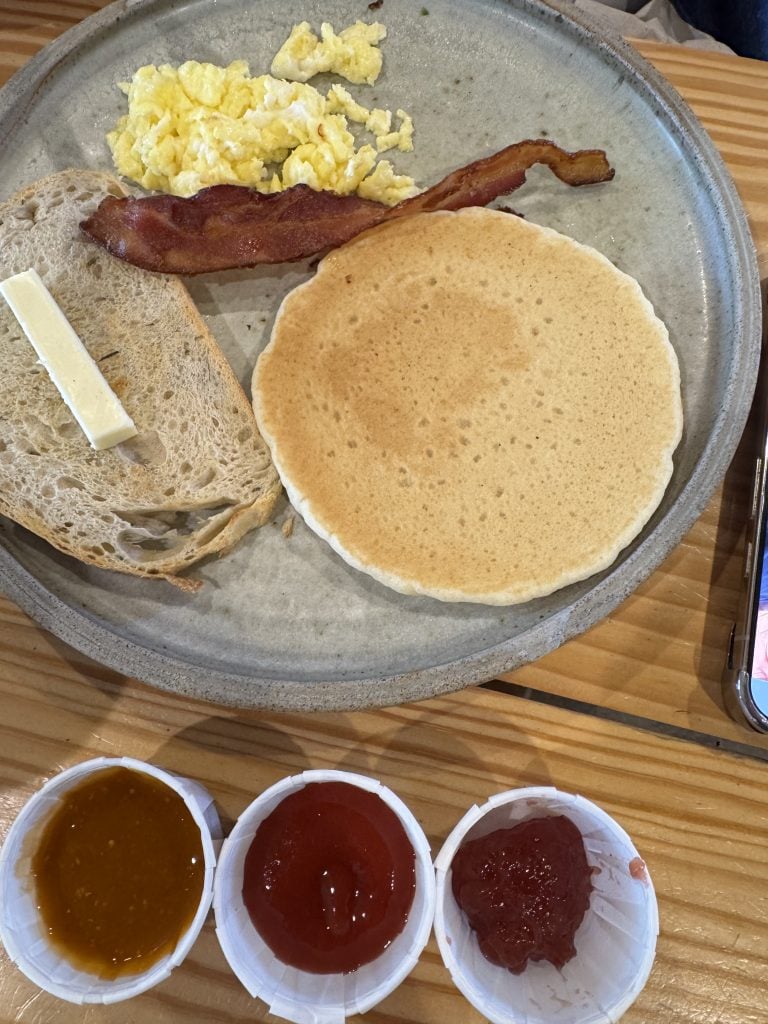
I couldn’t stomach the enchiladas option, and the pancake stack reminded me of the landscape outside my plane window…
October 4: The whole enchilada(s), my dangerous driving, and desert art-habbing.
I showed up just shy of 9 a.m., as I pretty much do seven days a week, to a packed café and found my sculpture serving as a tabletop for more enchiladas than I’d ever seen in one place, a few backpacks, and a puddle of water pooled beside it all. Safe to say, the steel is no longer stainless.
Regardless, I resigned myself to such occurrences as this is what I knowingly signed up for. The upside? This exercise is proving therapeutic in combating my fanatical obsessive-compulsive disorder. Admittedly, I long to return home to New York, if only brandish my sponge and resume scrubbing and scouring.

Mr. Homeland Security-U.S. Customs and Border Protection agent wasn’t terribly amused by my sneaky snap. I better watch it before I am next to be bundled off on a flight to god know’s where. Whose honor first, that’s the question?
What was more amusing was I jumped into my truck on the way to “work” (it’s only a few minutes from my hotel, but I needed to drive somewhere after) and proceeded to make an illegal U-turn, un-seatbelted, while being waved along by a considerate driver headed in the opposite direction. Only after completing my three-point maneuver (which was well performed, I might add) did I notice that the person who let me cut in front was the town sheriff! I burst out laughing, in an oh-fuck-could-I be-any-stupider moment of catharsis. He just smiled back and kept on truckin’. People really are kind here.
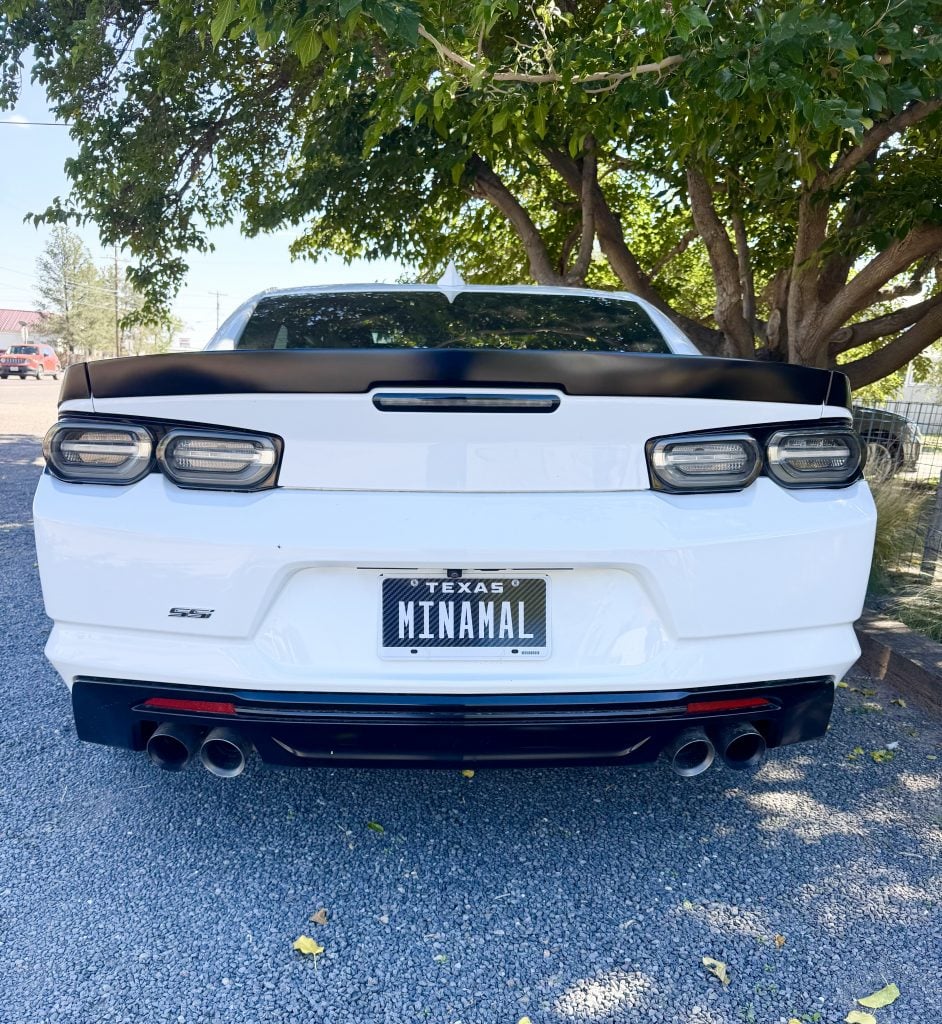
In the desert environs of minimalism, even the cars bear witness.
I know lots of artsy-fartsy types in and around Minneapolis in the art and music industries, which happen to be near the famed Hazelden Betty Ford Foundation rehab clinic. No coincidence there. Like the old Roach Motel advert, they check-in for treatment and don’t check-out of the surroundings. Sorry for the inappropriate joke, but I’m a recovering addict myself.
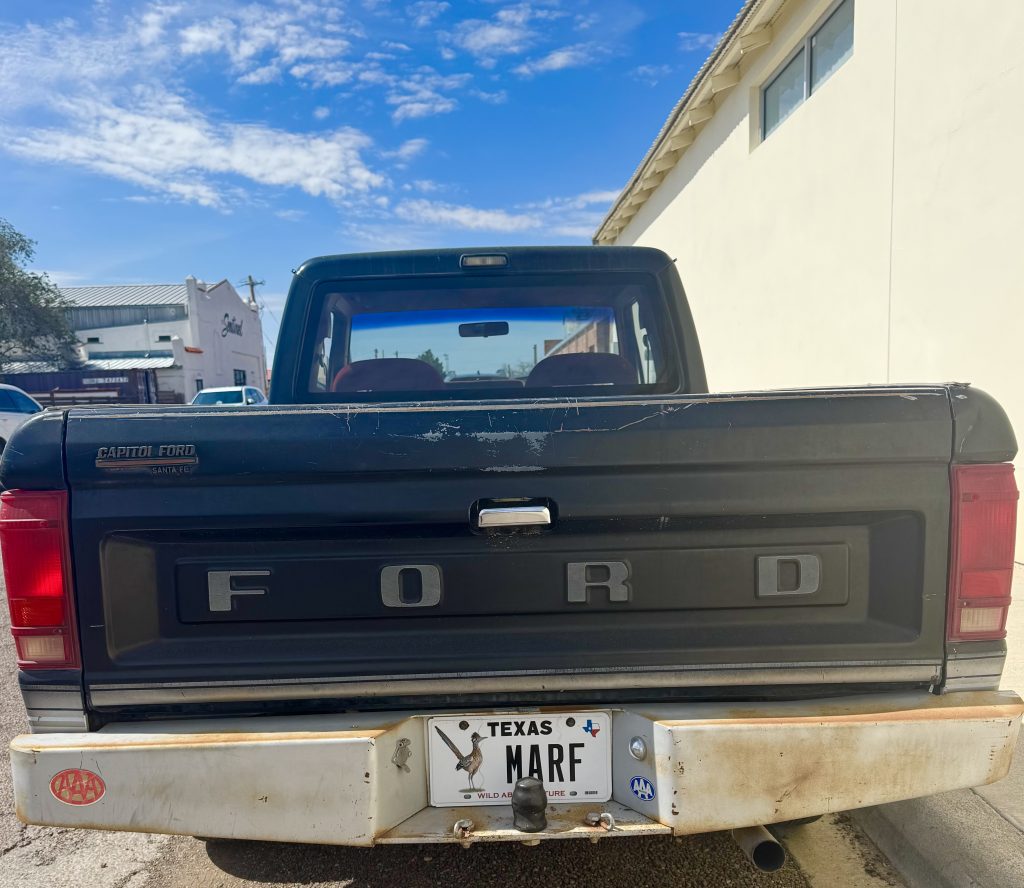
“Marf” is for the birds…and me! No wonder this town catches many who merely come to visit, like a raccoon trap. It’s intoxicating.
Similarly (kind of) in this neck of the… desert, there are lots of Juddites who, after internships, residencies, or positions with the foundations, have established footholds in and around town, including Christopher Wool and countless others. Like many before and after, Wool, who lives between New York and Marfa with his brilliant wife, painter Charline von Heyl, was lured back around 2006, following a residency. I heard such accounts again and again.
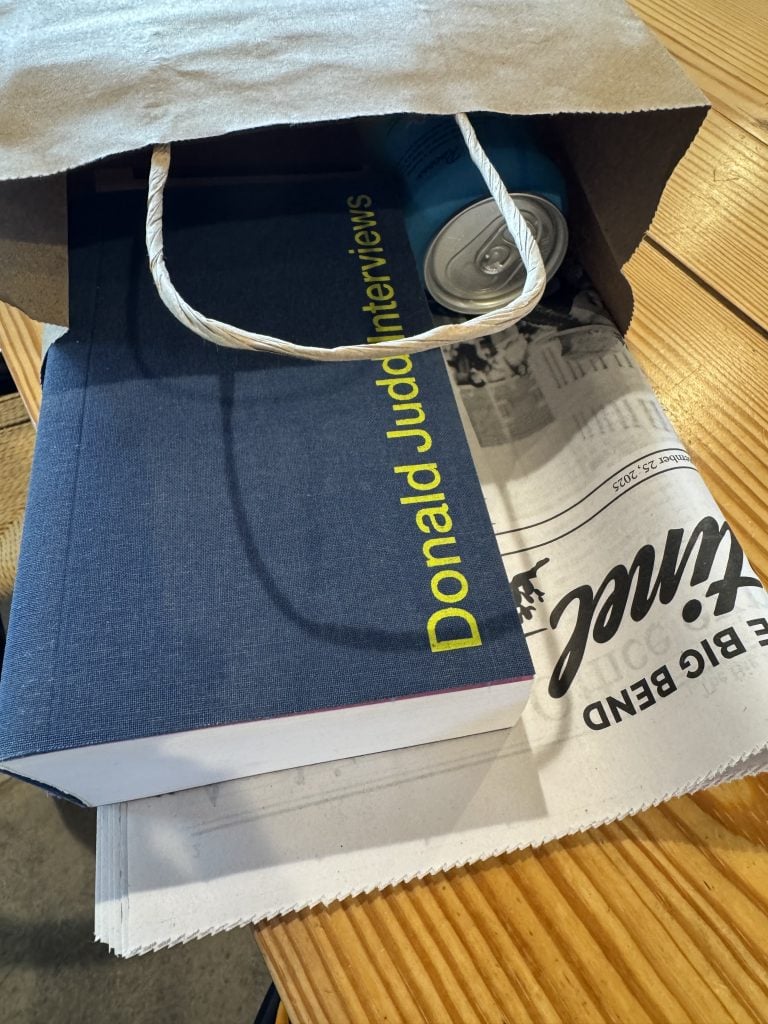
Got my homework cut out for me! Judd’s reticence and irascibility gives me a run for my money! This bible-sized book of interviews, not to mention the tome of his collected writings, will preoccupy me for much of my two-week jaunt here.
October 5: Judd, the Hoarder with order who also had the hots for a bit of hot air
I’ve largely been trying to avoid the elephant in the barrel-ceilinged barracks, Donald Judd, who fabricated his way into the canons of art, design, and architecture history. But I’ll share a few thoughts on the subject, without resorting to rehashed clichés (hopefully). Most incongruously, the godfather of minimalism was a monumental magpie that out-accumulated even me. Imagine that. But where we differ most dramatically is the fact that Judd was a hoarder with order. Everything that he acquired—and there was lots (and lots of lots)—he compartmentalized and codified to the extreme.
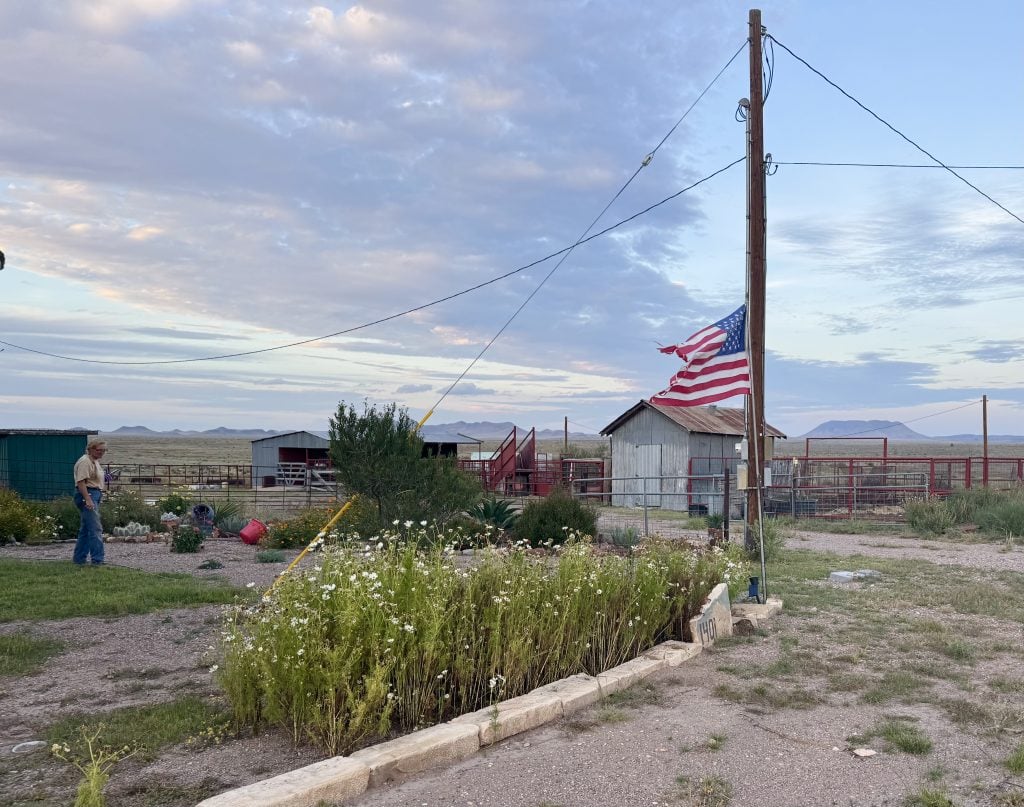
They call Montauk, Long Island the End of the World. They’ve obviously never been to Marfa. Could you conjure anything most stunning? No! I will surmise the flag is at half-staff due to the crap state of this country at war—with itself.
The scope of Judd’s holdings traversed Navajo rugs; furniture and design by Alvar Aalto, Mies van der Rohe, Gerrit Rietveld, Rudolph Schindler, Gustav Stickley; and art by George Earl Ortman, Agnes Martin, Lucas Samaras, Jasper Johns. Yayoi Kusama, H. C. Westermann, John Wesley, Fred Sandback, and Roni Horn, among many others. The avid bibliophile collected more books than the Library of Congress, which Trump hasn’t gotten around to pruning—just yet.
Another Juddian tidbit not widely known was his penchant for pipes—bagpipes, that is. Judd collected examples of the (wildly annoying, to me) woodwind instrument that is associated with Scotland but that originated in the Middle East or North Africa, dating at least to ancient Egypt around 400 B.C., and perhaps even earlier (according to A.I., anyway). Best of all was his stated reasoning for insisting on bagpipe performances at many of his openings, and for constantly having bagpipe music playing in the background of his SoHo building on Spring Street: “When the bagpipes start, the conversations end.”
I took a million under-the-radar photos in elucidating private tours the last few days, but sorry folks, you’ll just have to conjure…
October 7: Architecture that breathes and artworks that walk.
The ginormous, barrel-shaped, galvanized iron roofs of the artillery sheds and military airplane hangars repurposed by Judd to house portions of his encyclopedic collections of art, design, and books (and bagpipes!) are wondrous in and of themselves. Everything he breathed on, despite the conceptual rigidity and austerity that most would equate with his all-encompassing Weltanschauung (“worldview”), in actuality is imbued with heartfelt passion and humanity.
Another widely held misconception about Judd, that I had personally acquiesced to, has to do with his bellicose dictum that form should never violate function. There’s an emotional, sensitive aspect underlying his structures. His life’s work is, to me at least, a utopic vision obstinate in focus but also unstinting in his embrace of artists he responded to (that were or became friends, like Roni Horn), facilitating commissions permanently situated throughout Marfa. I was taken aback by how touched I was by it, and, moreover, by the devoted community of custodians that tend to it all and explicate to the droves of tour goers with a grace and tenderness akin to caretakers in an art hospice.
The architecture and artworks exude mortal qualities that took me aback. The buildings and sculptures speak, communicate (well, they randomly radiate sounds) through a series of pings, dings, and rings that are audible as you make your way through the environs. If any foundation curators are reading this, I’d like to install sensitive recording equipment in the vaulted rooftops and amid the grid of 100 untitled works in mill aluminum (1982–86), the large-scale sculptures that form an endless horizon in two of the Chinati structures.
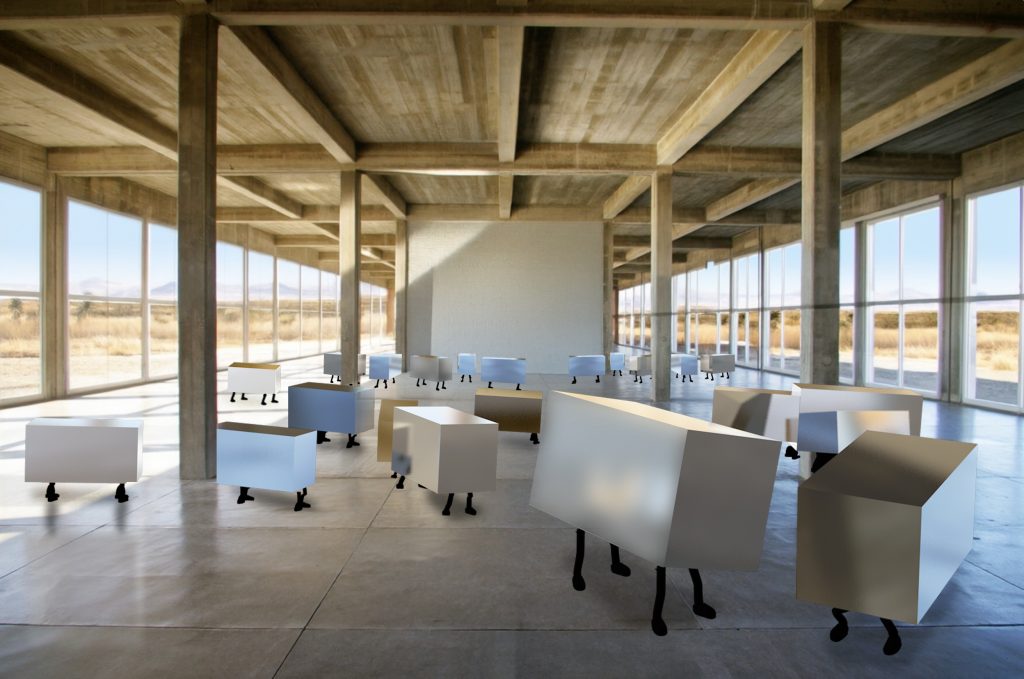
One last thing regarding the 100 untitled works. Due to extremes of temperature, these pieces possess additional seemingly humanoid tendencies, perpetually incrementally shifting over the course of the nearly 40 years they’ve been “living” in the sheds—sorry for my characterization, Don. A curator referred to the movements, caused by expansions and contractions of the metal, as the sculptures “walking.” I hope the animation I’m working on depicting this phenomenon (in my, umm, inimitable manner) doesn’t exacerbate the grave-spinning of Judd I may already have stirred.