

Artists and gallery employees are invariably the first (and last) to get screwed and have been since… forever. Bankruptcy clawback provisions are yet another situation where what’s bad can get even worse, when the artists and staff are sued instead of the dealer! Courtesy Kenny Schachter
As the dollar sinks to its lowest levels since the Nixon
Trump, the cash-grabbing rabid anti-communist, and his administration are beginning to resemble President Xi Jinping and his centrally controlled economy as much as Putin and his totalitarian regime. The U.S. is arrogating 15 percent of Chinese revenues from chip manufacturers Nvidia and AMD, taking an outright 10 percent equity stake in Intel, and receiving a “golden share” in U.S. Steel, which gives Washington control over critical business decisions as a condition of Japan’s Nippon Steel takeover. Together, these moves are nothing short of astonishing. Trump, Xi, and Putin are equally punitive in their thin-skinned, rancorous refusal to countenance dissent.
What’s worse is Trump’s vengeful onslaught on U.S. museums, now in full swing. The programming and operations of the 19 Smithsonian museums are under review and the—as yet unannounced—U.S. Pavilion at next year’s Venice Biennial will, in all probability, be a toadying Trumpian masturbatory celebration worthy of endless parodies, first and foremost by me. What will follow, takeovers of Sotheby’s, the Basels, and Hauser and Wirth?
My eyes were rolling deep into the upper reaches of their sockets when Kamala Harris declared she was no longer interested in another run for public office, blaming “the broken system” and sounding remarkably like Tim Blum (and others) when he announced his intent to “sunset” his gallery. (Though neither finished nor officially on the market, Blum’s as-yet-unopened Tribeca gallery is whispered to be for sale at $8 million-plus; he paid $5.3 million.) When galleries are going gangbusters and the takings are bountiful, there are no complaints; but as soon as profits plummet, the finger-pointing spreads faster than herpes.
Ten years of Damien Hirst satires comprising over 30 videos. I would like to take this opportunity to thank him for generously and selflessly providing me such rich material to work from.
It reminded me of chatter I heard at the charging station when I borrowed a friend’s electric car and everyone was nit-picking about the niggles in their vehicles, from doors that wouldn’t open to trunks that wouldn’t close, before happily driving off and enjoying unprecedented low-cost motoring. The art world engages in Olympian levels of competitive complaining instead of picking themselves up by the bootstraps and simply getting on with it.
Yes, we’re smack in the middle of a nasty cyclical economic downturn—nothing new on that front—that concomitantly presents an ideal time to take stock and recalibrate. Many of the galleries that are closing, willfully or otherwise, subscribed to the model that more was more, reminiscent of Gordon Gekko’s “greed is good” mantra in Oliver Stone’s galvanizing, culture-capturing 1987 film, Wall Street.
Endless fairs, beachheads in multiple cities and countries, ever-escalating art prices, while turning a blind eye to a vital question: Who’s going to buy the seemingly infinite stream of crap we interminably make and (try to) sell? I say that endearingly, mind you. Another thing many galleries gave, and continue to give, is short shrift to nurturing new audiences; and, having the foresight to create a financial buffer for leaner times that invariably come. And come again.
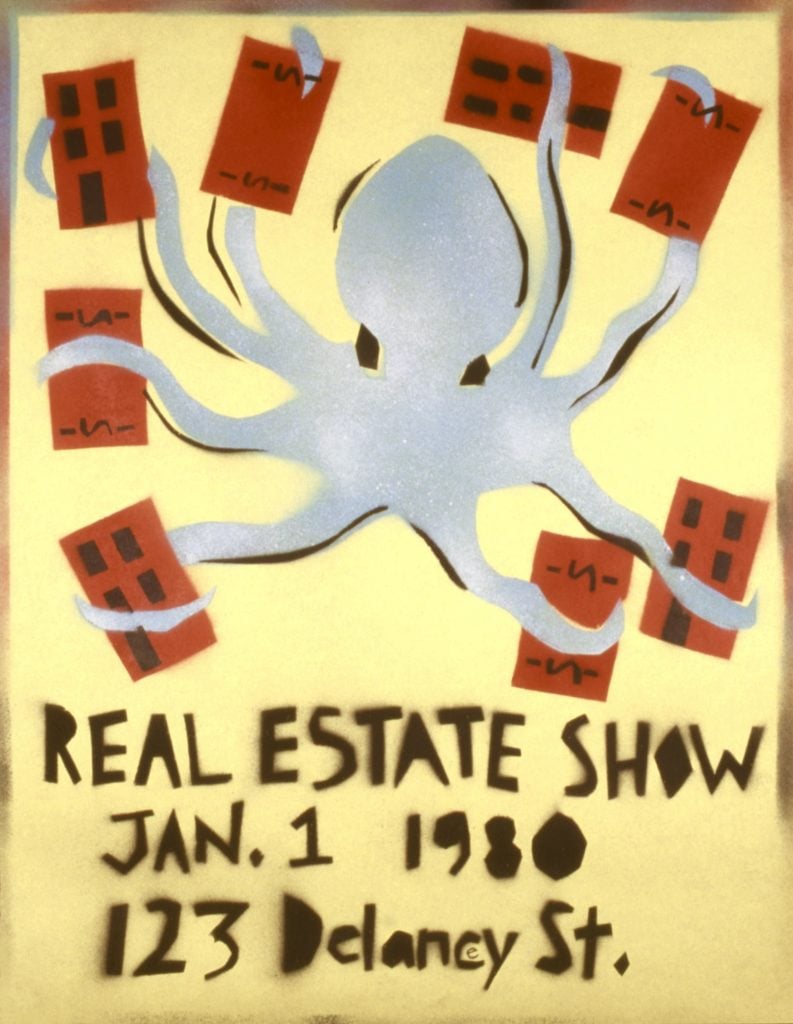
More than ever, it’s time for artists to take matters back into their own hands and start community initiatives and collaborations like the 1970s and 80s efforts of Collab Projects, ABC No Rio, the Wooster Group, Group Material, etc. Poster courtesy of Becky Howland
Art, in its immeasurable guises, is resilient—it always has been and will be. Regardless, it is about fucking time to find new paths forward and readdress past paradigms. Cast an eye back to artist-led collectives, a rash of which unfolded in the 1970s and ‘80s in New York, such as Collab Projects, ABC No Rio, Art in General, the Wooster Group, Artists Space, White Columns, and Group Material. They all made meaningful contributions to the scene and to the lives of artists, and many of them still exist. It’s as good a time as any for more community-based, collaborative initiatives.
Traditional galleries are so 2020s. For the past two years, I exhibited in the fundraising auction for LongHouse, a nature reserve in East Hampton with programs in art and education, featuring more than 60 outdoor sculptures. The event was organized by Pam Willoughby and Mary Gail Doerhoefer and the participants were asked to determine the percentage that would benefit the charity, with the remainder reverting to the artists. I got to meet the buyers of my art and forge a relationship. On both occasions, it was incredibly meaningful for each of us—admittedly more so for me.
I reached out to a number of galleries in the ebbing days of summer, scraping for intel, to get a more accurate reading of things beyond the blare of click-baiting, doomsaying headlines. There are plenty of galleries aside from the megas, too many to list, that are in fundamentally sound health that don’t make the news, albeit not at levels of previous periods of irrational exuberance. And they’re doing just fine, thank you. Besides, all of us that do art (in all its stripes) can’t do anything else.
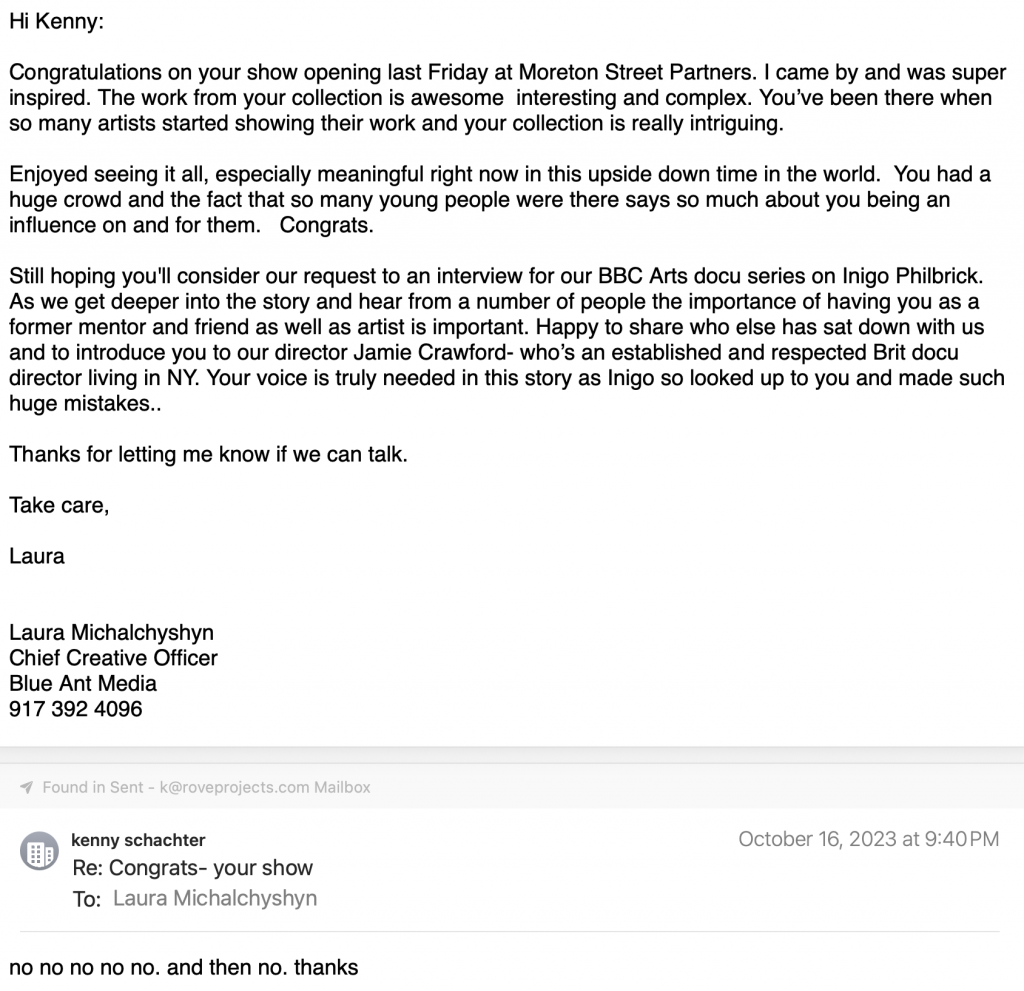
The BBC buttering me up to participate in their Inigo documentary (after two years in production) that finally airs later this month. I rebuffed them for nearly a year until my kids convinced me it would be weird not to participate after my New York magazine feature on the subject. Grab your popcorn. With the participation of Inigo and his new wife, what a tale of fiction this will be.
I’ve heard anecdotes of art buyers making offers that are far less than asking prices and then going radio silent when they are rebuffed, without bothering to renegotiate. It’s not that the public would rather have “experiences,” the idea endlessly bandied about in the press as the reason people are neglecting to patronize galleries. Seeing art is an experience in itself, for Christ’s sake.
Admittedly, in these uncertain times, the urge to possess has taken a blow and become less urgent. But squirreling away nuts is as primal as the urge to procreate. For me especially. Buy one, get one free might be next on the horizon.
I even have an advisor friend, a few actually (imagine that), one of whom had his highest gross last year, posting nine figures. Below is the conversation that ensued with the successful, thoughtful owner of a mid-tier, Basel-going gallery that has been in business for decades, and that has weathered several ups and downs throughout, landing on her feet every time:
KS: How do you find the general temperature of gallery land?
Gallerist: I just don’t want to see any more articles about how the gallery world is collapsing and how we are all corrupt assholes.
KS: I always make an effort to pinpoint the positive.
Gallerist: Yes, you do! But not the others!
KS: None of them have skin in the game.
Gallerist: I don’t think galleries are so bad—you can see a lot of great shows for free! And we pay for everything! I just think it’s hard to write about the art market, it’s so broad. And it does a lot of damage. And because of all the negative press, clients are running away now.
KS: Funny story. When I did a studio visit with Lucas Samaras over a decade ago, he asked what I did—to which he replied: WHY?!?!
Galleries: Hahaha. Yes 30 years ago no one cared!
KS: I couldn’t come up with a plausible answer to Samaras.
Gallerist: And I blame Basel for turning it all into luxury branding.
KS: I hear people have asked to pay for Paris Basel in installments, a first!
Gallerist: Are they accepting a payment plan?? We didn’t get the bill yet!!
KS: The lousy dollar-euro exchange rate is going to crush many U.S. participants on top of everything else.
Gallerist: We sold to a lot of Euros during Basel Paris last year, but they only bought our Euro artists.
KS: I hope you do, as well.
Gallerist: Thanks!! But clients are spooked with some of the other fairs pausing and closing and the gallery closures, so we shall see!!! And of course, I blame HWG (Hauser and Wirth Gallery) and DZG (David Zwirner Gallery) for the insatiable manifest destiny.
KS: What do you mean?
Gallerist: Because they set the tone so other galleries tried the same approach on a smaller scale and it proved fatal—the unsustainable idea of ever-expanding and so that’s what the collectors are accustomed to now. Anyway, all good.
KS: ish
Gallerist: ? Also why are Euro galleries not closing at the same rate is U.S. galleries, I guess because their overhead is lower.
KS: They didn’t expand as much.
Gallerist: Except for HWG and White Cube, but yes, you’re right. Did you see this: “Artnet Big Galleries Are Racing to Sign Emerging Artists. It’s Changing Everything” Great!
KS: Hah. Thanks for your always frank, forthright insight!
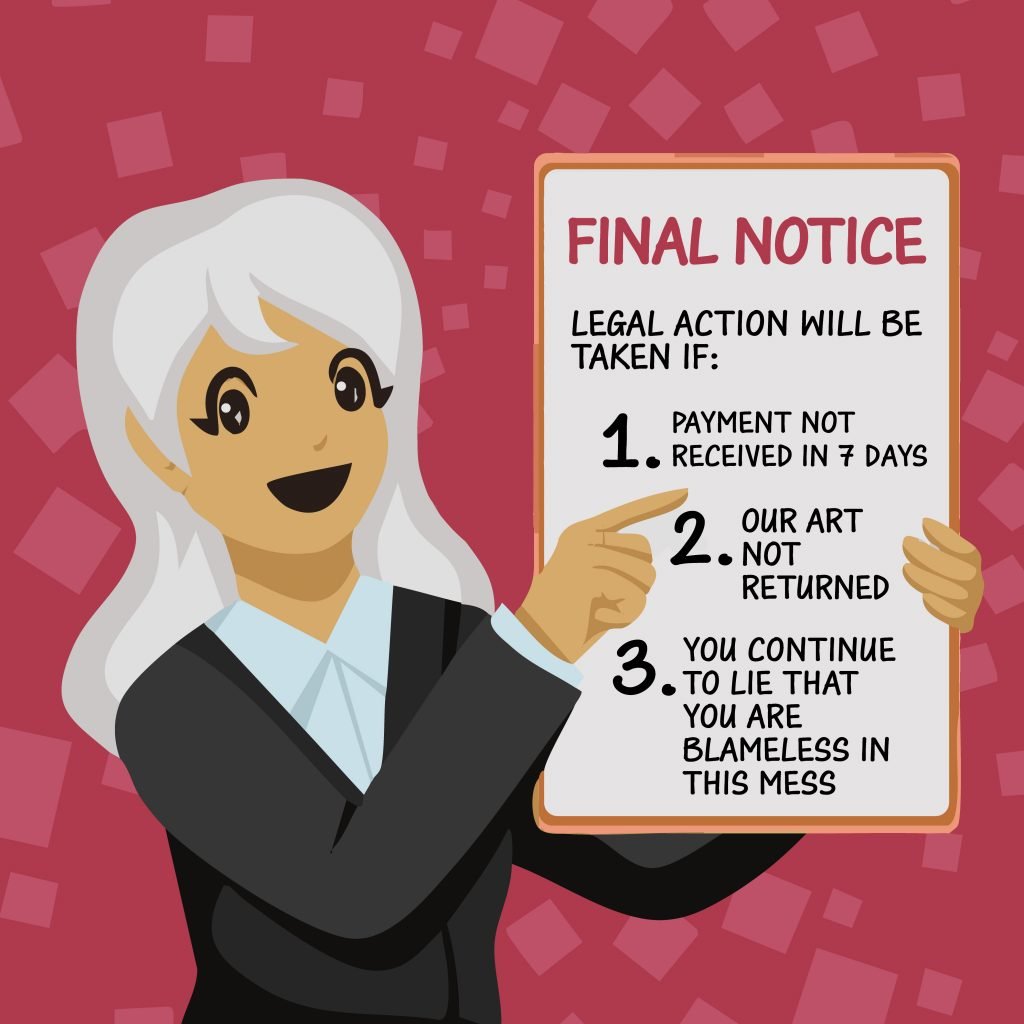
As bad as instances of galleries not paying (and they are legion) are when dealers gaslight artists, blaming them and expecting gratitude for exhibits past. And lying to everyone (and themselves) that they are not in arrears in the first instance.
Not everyone is faring well, obviously. It doesn’t necessarily mean the people are morally wayward, or began that way then they set up shop. Various sources informed me that Marian Goodman Gallery is under financial pressure and considering closing its L.A. space. A spokesperson for the galley told me, “We are programmed in L.A. through 2026 and have no intention of closing right now.”
I also hear that Yoshitomo Nara is going solo, ending his longstanding relationships with galleries, and that the rumored Pace-Sotheby’s marriage has ended in divorce before even being consummated. When I sent Marc Glimcher a text regarding Nara, he immediately phoned to say it’s idle hearsay and not true; as for the Sotheby’s hookup, he said: please don’t employ the term “divorce.” I believe he’s on his third. Don’t people learn?
Glimcher said he reduced his general expenses 20 percent (wages), but his burdensome fixed overhead (rent) remains his “Damocles Sword.” In the face of the onslaught of an awful economy, he told me he “was at war, which he was built for,” after years of fighting with his dad, Arne, “in a good way.” He’s smart and candid, and I wish him luck.
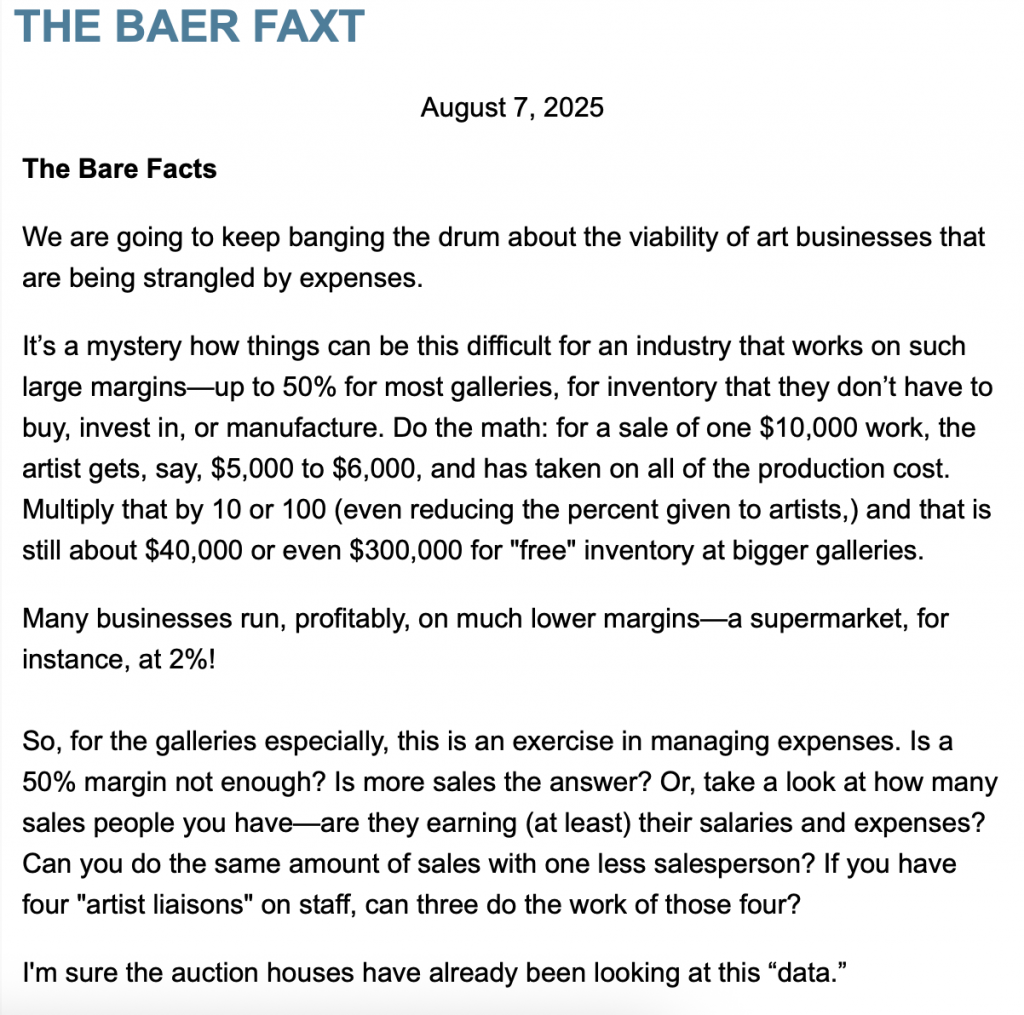
Josh Baer questioned how galleries can fail while reaping a 50 percent commission when supermarkets thrive on 2 percent margins. He seems to forgotten his past.
Josh Baer launched an insider’s newsletter (The Baer Faxt) in 1994 to report auction results, and it became coveted as much for revealing the names of underbidders as winners. That info was seized by dealers trying to hawk art to those who came up short in the salesrooms. Josh is very clever, not solely for interviewing me about the condition of the art world during Art Basel in June, but because he adroitly pivoted to become a vital content creator, chronicling today’s art landscape.
Less compelling were his recent comments that “it’s a mystery why galleries can’t survive with 50% margins when supermarkets thrive on merely 2%.” Perhaps his memory from 30 years ago is selective regarding the closure of his namesake gallery:
“I gave it 10 years, but I became a bit of a dinosaur,” said Josh Baer, whose Broome Street gallery in SoHo has featured contemporary artists including Nancy Spero, Chris Burden, and Annette Lemieux. “It’s just not going to work anymore, giving clients the services they need and paying the overhead while showing difficult art the market can’t support.”
When Good Pets Go Bad was an early progenitor of low-budget, cheesy reality TV that launched in the late 1990s and graphicly presented just that: household dogs and the like gruesomely turning on family members. It reminds me of the spate of dealers that started with the best of intentions and resorting to stealing money from staff and artists and gaslighting them when their businesses went rotten.
It’s hard to write about people you like and (used to) respect who spiral into such bad faith and delusional behavior—they seem a contagion in today’s rough-and-tumble art market.
Want to help a gallery out of a Hole? The gallery is still in arrears in paying artists and staff. Will it abate? Not too sure at the moment…
The Hole remains delinquent in paying artists and its L.A. gallery is up for rent. Might closure altogether be on the horizon?
A group of artists and former employees are taking legal action to defend themselves against a once-prominent London gallery that shuttered and was forced into receivership last year. Attorneys for the liquidators informed these victims that they were suing them(!) to claw back wages and/or fees paid within a certain statutory timeframe, prior to the collapse of the gallery, according to bankruptcy provisions. Numerous victims asked me to refrain from recounting specific details of the debacle as they prepare their response.
Now it all makes sense: The bad business practices of defunct dealer José Freire, who curated the latest show at Lubov in New York (still on view after a police incident I reported) may have been aspirational for the gallery’s owner, Francisco Correra Cordero. After my article last month, a few of Cordero’s artists got in touch to relate their dismay over money they allege they are owed.
As a result of my Artnet column, it’s a regular occurrence that artists contact me to assist them in recouping funds owed them by galleries; perhaps it’s time expand my repertoire, adding a subsidiary: Kenny’s Kollection Agency.
Through a Chinese collector’s Instagram post, former Lubov artist Shannon Cartier Lucy became aware of a painting that was not only sold but also paid for and shipped. After an uncontested action in federal court, there’s a judgment against Cordero, in favor of Cartier Lucy. Cordero told me “Shannon and I are working on an issue regarding a piece sold spring of 2024.” As recently as last week, he was allegedly a no-show for settlement meetings with the artist’s lawyer.
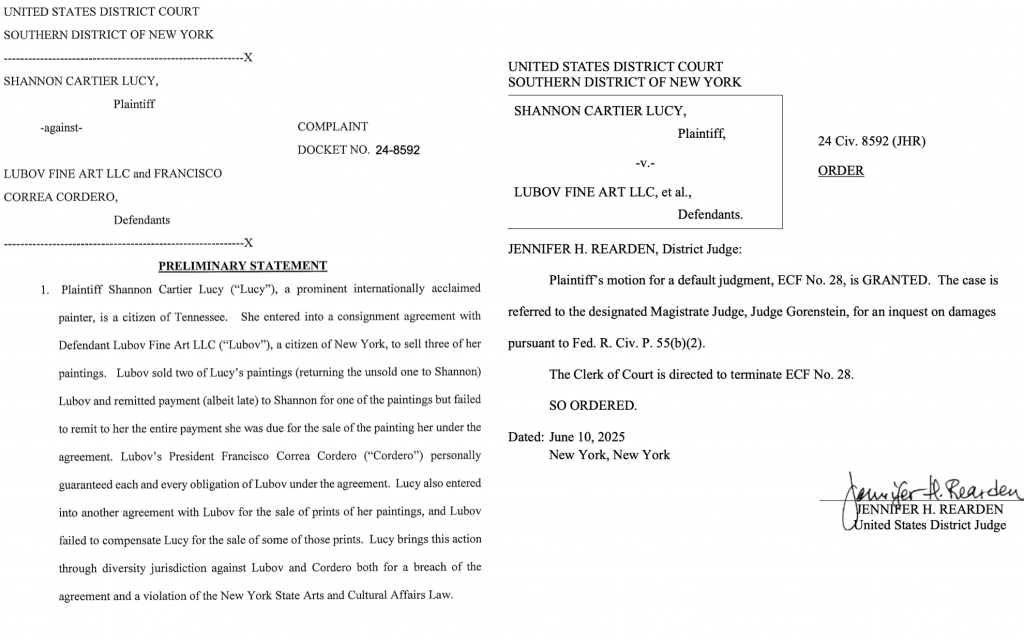
Now it all makes sense. The bad business practices of defunct gallerist José Freire, who curated the latest show at Lubov (still on view after a police incident at the gallery I previously reported) may have been the role model for owner Francisco Cordero, who’s alleged not to have paid some of his artists. Here’s the still-unpaid judgment in favor of artist Shannon Cartier Lucy.
It’s not just allegedly deadbeat dealers who are in impecunious straights. There’s also David Mimran, the fledgling down-and-out son of a billionaire sugar magnate who was sued by Phillips over an unpaid Jackson Pollock guarantee. Mimran is also up to his eyeballs in debt to Christie’s and Sotheby’s on a Brice Marden, a Henry Moore, a René Magritte, a Gerhard Richter and others, totaling more than $100 million. (I have tried to reach him but have not heard back.) The auction houses are all too eager to keep the coins freely flowing, recouping commissions and fees every step of the way.
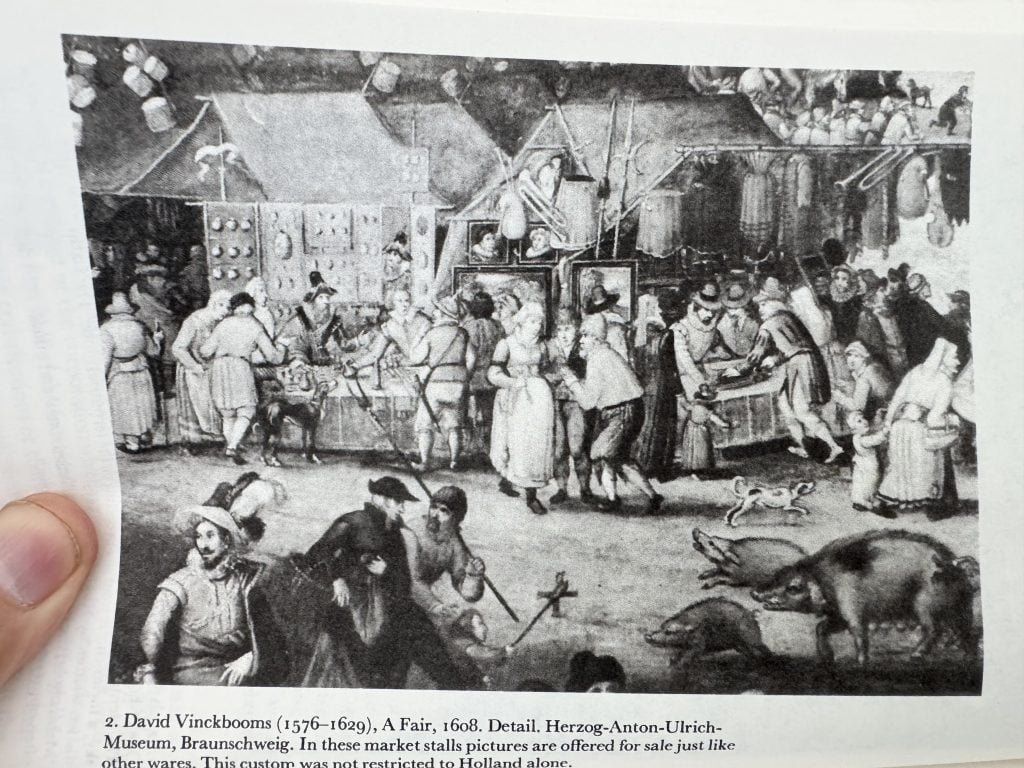
We love to complain about the art world as much as we love art (those of us still standing), especially art fairs. I bet it didn’t take long after they started in the 16th century—yup, it’s true—to begin moaning about how they need to change. Or stop! Image courtesy of Born Under Saturn, Margot and Rudolf Wittkower, New York Review Books Classics, 1963
Speaking of history repeating itself: Kings and popes were no different than any of the people above, suggesting a biblical inclination to postpone payment, if not evade it altogether. In the book Born Under Saturn, by Margot and Rudolf Wittkower (New York Review Books Classics, 1963), recommended to me by none other than my illustrious editor, Andrew Russeth, Titian wrote to King Phillip of Spain in 1560 of non-payment for extant monies owed for paintings and promised pension proceeds. The book also relays how Titian underreported his assets when filing taxes, another trait that could be traced in our DNA.
The very last sentence in Born Under Saturn is a quote by the painter J.M.W. Turner (1775–1851): “Art is a rum business.” According to the Oxford English Dictionary, a rum business “refers to something odd, strange, queer, problematic, difficult, or unusual.” No shit.
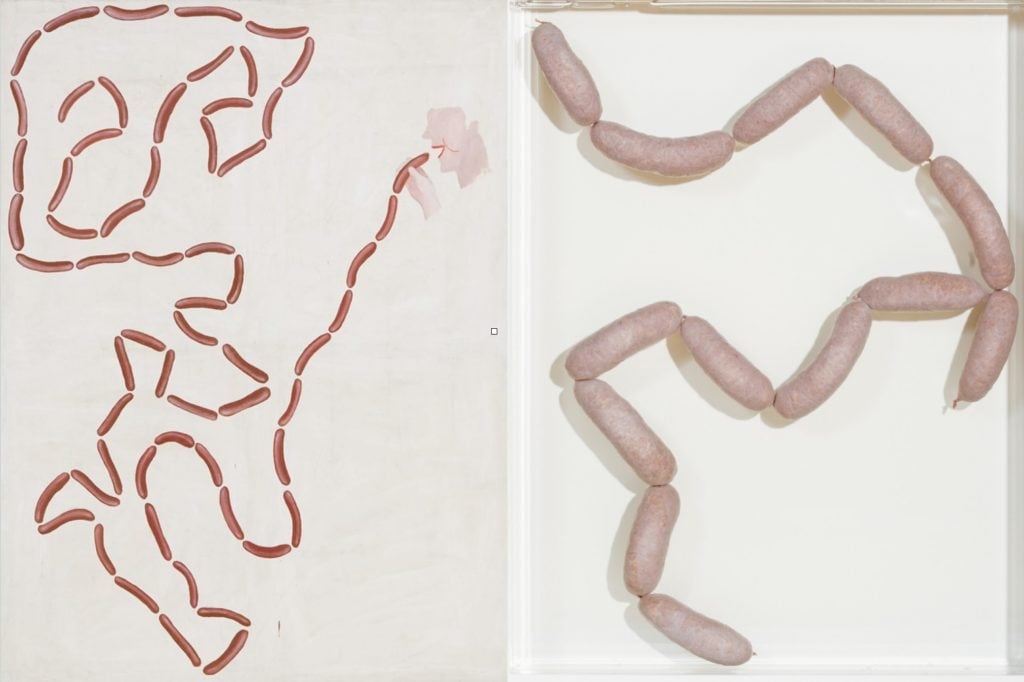
Before Walter Swennen took his life due to terminal emphysema, he recounted to a friend the German credo: Everything comes to an end, except sausages. Above: Sigmar Polke’s 1963 masterpiece of absurdity: The Sausage Eater and Damien Hirst’s take on Polke, 13 Sausages. I wouldn’t mind owning either one.
Another great painter, Walter Swennen, when asked by a friend before he took his life, via assisted suicide, due to incurable emphysema, whether he was certain of his decision, related the German credo: Everything comes to an end, except sausages. (Tout a une fin, sauf les saucisses). Who could reproach him? With rampant wars and brutal social, political, and economic unrest and instability, there’s barely a reason to get out of bed, much less buy, sell, or make art. But we do. And will.