
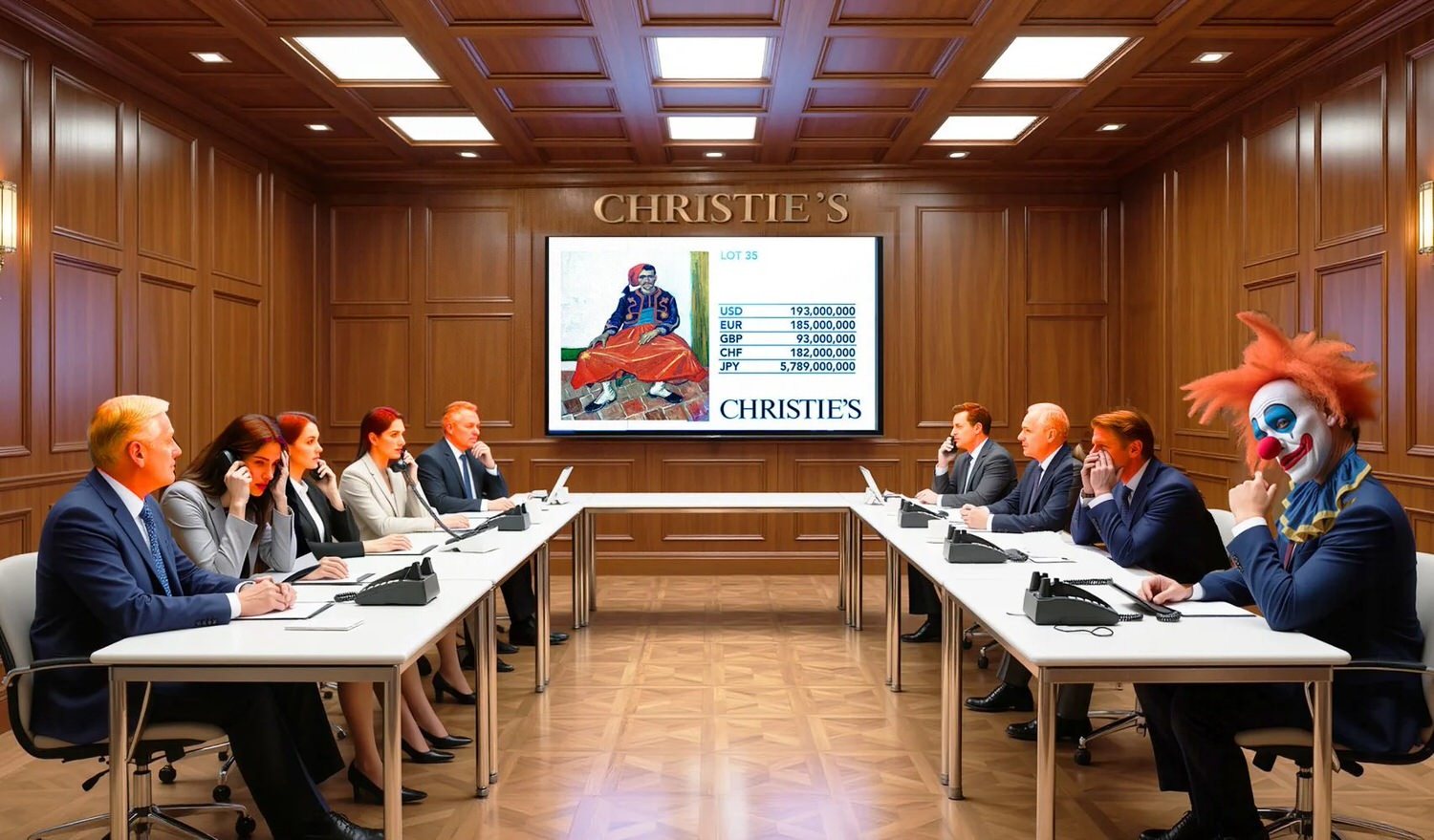
Find the clowns in the room. Vincent van Gogh’s Le Zouave depicts a French soldier in a regiment famous for colorful uniforms that later came to inspire the phrase faire le zouave (“to act the goat”), associated with clowning around. But after being sold at a private auction for $190+ million, the joke is on us. Image courtesy Kenny Schachter
Admittedly, I’ve always loved cartoons (and maybe still do), but it’s an altogether different thing to live smack in the midst of the United States of Looney Tunes. To think, we’re nearly a quarter of the way through the second term of one of the craziest and greediest presidents of all time—an alarming mixture of Daffy Duck, Elmer Fudd, and Porky Pig, all in one chancy caricature.
Looking at the year ahead, I foresee developments that I will detail below, but rest assured, I’ll drop the political theme for now, as not even Nostradamus could begin to foretell what’s in store for us next week, never mind the remaining three years of the Trump administration. In 1991, I curated an exhibition entitled “Certain Uncertainty” at the Lobby Gallery at Deutsche Bank in New York, and in the ensuing 35 years, nothing much has changed, other than the inexorable march of time. Though I must concede, the degree of precarious political farce in the U.S.A. could not have been foreseen, and it has redefined the notion of impulsivity.
Columnist Clive Crook penned an opinion piece in Bloomberg comparing the cataclysm wrought by artificial intelligence to that of the Industrial Revolution, while arguing that this is all happening faster. He writes: “Where will this unprecedented surge of disruption lead? Everybody who claims to know is either lying or deluded, leaving us with what’s called ‘radical uncertainty.’”
Even as development continues on artificial general intelligence (A.I. that can equal or exceed human intelligence), the next thing on the horizon is advanced machine intelligence, which is being developed by Meta’s former A.I. chief scientist, Yann LeCun, and others. It aims to understand the physical world by learning from videos and spatial data in order to be capable of planning and reasoning with enduring memory. When LeCun was questioned in last week’s Financial Times about persisting in pushing A.I. into such uncharted territory, he replied that we humans “suffer from stupidity.” (From the top down, he might have added.)

Peering into my Jeff Koons gazing ball to foretell what the next year in the art world and beyond might look like. Image courtesy of Kenny Schachter.
It’s a fool’s game to try and predict precisely how and to what extent A.I. will inexorably impact the world, and the art world in particular. But whether you notice it or not, the impact of A.I. on art is already being felt, from making, to researching, to curating, to writing (not mine, mind you), to collecting. As the gallery grim reaper draws nearer, are you ready for A.I. Larry G?
Clare McAndrew, the Madonna of art-market metrics, reckoned the total of art sales in 2024 to be $57.5 billion and estimated it would be about the same (give or take a hundred mil) for 2025. I don’t anticipate more than a marginal uptick in 2026, though the sum will exceed last year’s, I can confidently avow. But to put that number in perspective, Bain & Company and Altagamma estimated the personal luxury goods market at approximately $420 billion in 2025 in their annual report on the subject.
This category of crap (a.k.a. luxury goods) will increasingly and insipidly gnaw at the heels of our insular little world, with bags, baubles, watches, and cars, not to mention soiled jerseys and dinosaur discards (fossils and skeletons), appearing in exhibitions, fairs, and auctions.
Sotheby’s will continue to lead the charge in its hybrid auction house/museum/gallery digs, blurring distinctions with dog and pony shows, like its recent parading of high-priced bounty in its traveling not-for-sale “Icon” show, largely comprised of Ken Griffin’s astronomical acquisitions (including the $200 million Basquiat that I revealed he bought), with a few other expensive items tossed into the mix. In the former Breuer Building, museum labels were simulated to detail a pageantry of prices, rather than provide actual art exegesis.
In every epoch, we get what we deserve: In ours, it’s the apotheosis of short-attention-span mindsets, characterized by an unquenchable pursuit of wealth, the most reductive of all criteria for assessing cultural significance (besides social media tallies of likes and followers). In such a context, the art itself becomes all but irrelevant, well-nigh beside the point.
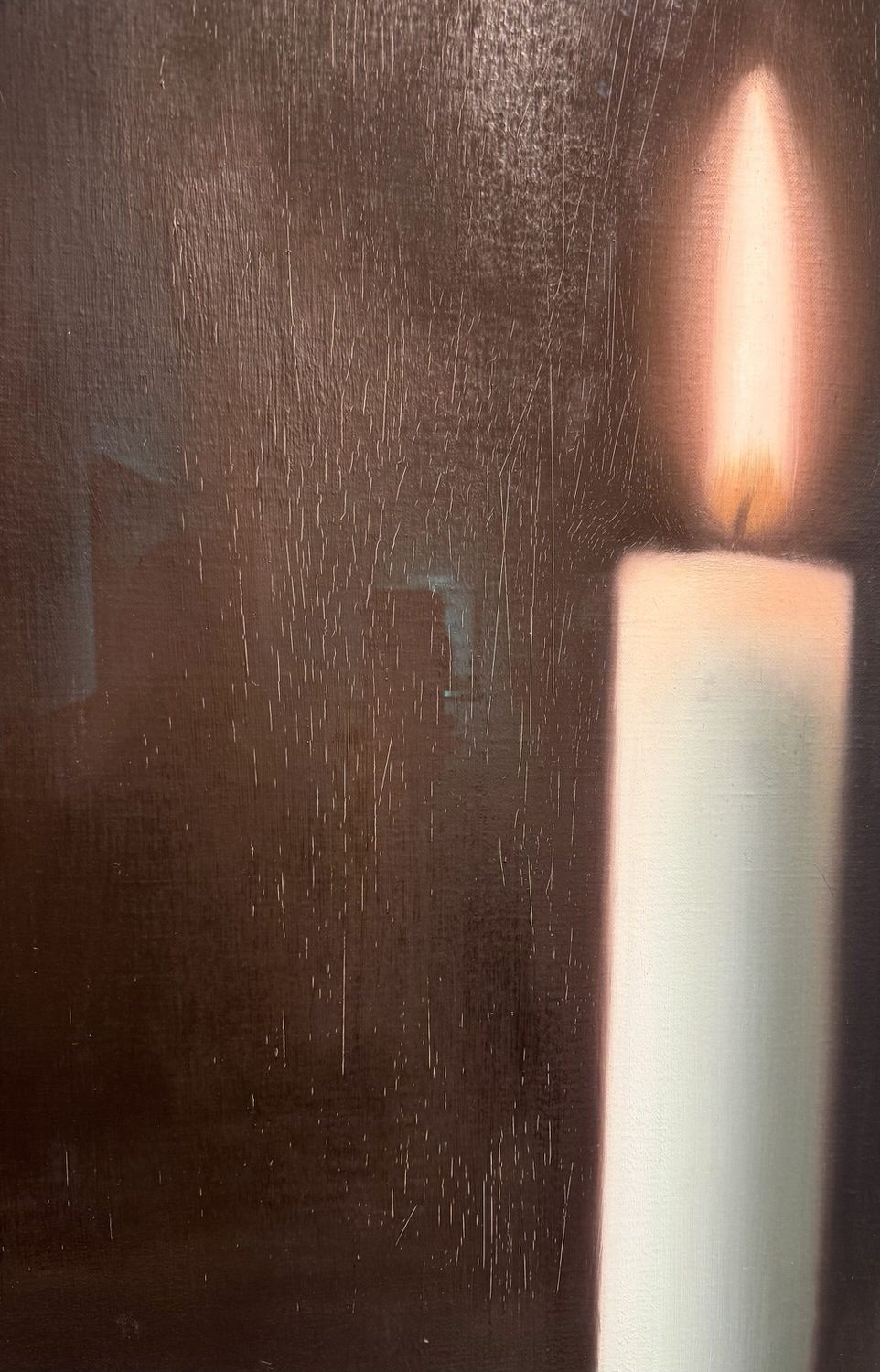
Cracked actor—Gerhard Richter’s may not be dripping wax, but they sure are replete with dense and pervasive craquelure. Image courtesy Kenny Schachter
When I paid a visit to the by-appointment “Icons” show, a coveted Gerhard Richter double candle composition was replete with exposed surface cracks, revealing the white underpainting pervading a third of the composition. I queried a Sotheby’s employee who was shepherding a well-heeled couple around and asked:
KS: Excuse me, do you work here?
Sotheby’s specialist: Yes.
KS: What’s up with the cracks all over the surface of the Richter [for kicks, knowing full well what was up with them]?
Sotheby’s specialist: They are inherent to the work, he did it on purpose for effect.
As if. In 2014, I curated an exhibition of Richter and his former compatriot Sigmar Polke at Christie’s in London, their first show together in nearly 50 years. Its title was “polke/richter, richter/polke,” the name of their 1966 exhibition at Galerie h in Hanover, the only time they collaborated before falling out in the ensuing years. Of the 30 Richter canvases on view, both abstract and figurative, not a single one—including the candle painting—bore a visible crack.
Coaxing out information about a secretive private auction (a trend nowadays) in a room peopled by pornographically deep-pocketed bidders is neither an enviable task nor an easy feat, I assure you. The latest treasure to cross the block: Vincent van Gogh’s Le Zouave (1888), of a soldier in that class of French light infantry, who were known for their distinctive and (for the intent of the artist, ideally) colorful uniforms and bravery.
The Zouaves inspired the French phrase faire le zouave (“to act the goat”), meaning to act silly or clown around, but it’s not a laughing matter that the world’s cultural heritage is being picked off and bagged like big-game trophies by techno overlords and fossil fuel–funded sovereign wealth tourist attractions. Fully 99.9 percent of the world’s museums are priced out of the mix.
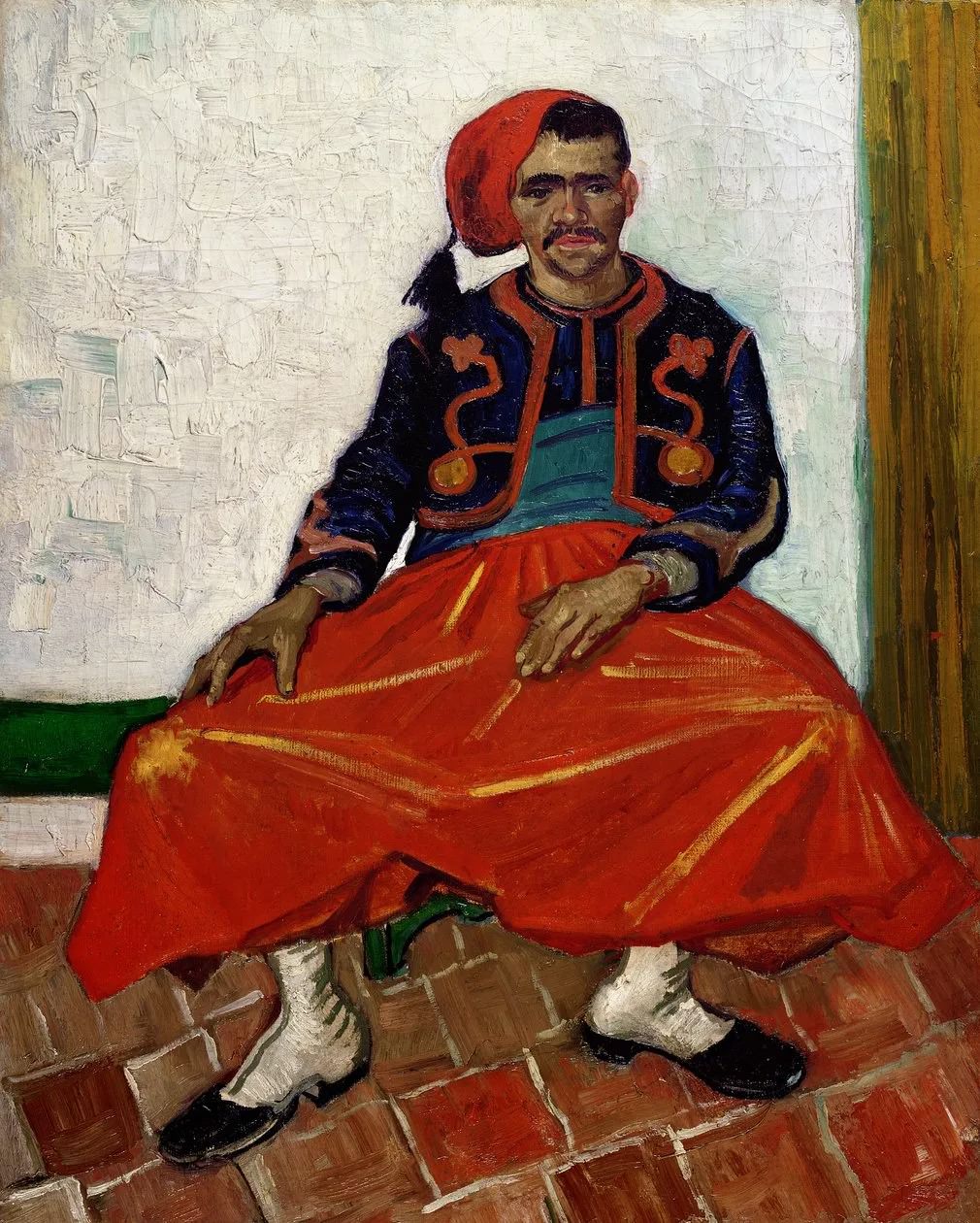
Vincent van Gogh’s Le Zouave (1888).
One of a number of works that the artist made of the subject, Le Zouave was offered privately, via Christie’s, during Covid, I’m told, with an asking price of approximately $300 million (eye-roll), unframed and with a number of visible cracks of its own, though it was in nowhere near the lousy condition of Richter’s candles.
After being framed and restored, the painting came back to market, this time around in that private auction I mentioned, with a handful of auction specialists seated around a table wielding phones with six registered bidders. It’s a safe bet that Griffin, Jeff Bezos, maybe the Zuck (who recently splurged on a Magritte), an Asian collector or two, and some members of the Arab aristocracy joined the fray.
From what I can glean from my sources, Le Zouave sold for just above $190 million, with the art-dealing Nahmad dynasty dropping out at approximately $160 million. The Nahmads, when reached by email, had no comment. The air is thin at 20 Rockefeller Plaza, the location of Christie’s headquarters. Give me a sec to determine who landed the masterpiece, and I’ll revert soon. (Katharine Arnold, Christie’s vice chairman for 20th- and 21st-century art, did not respond to a request for comment.)
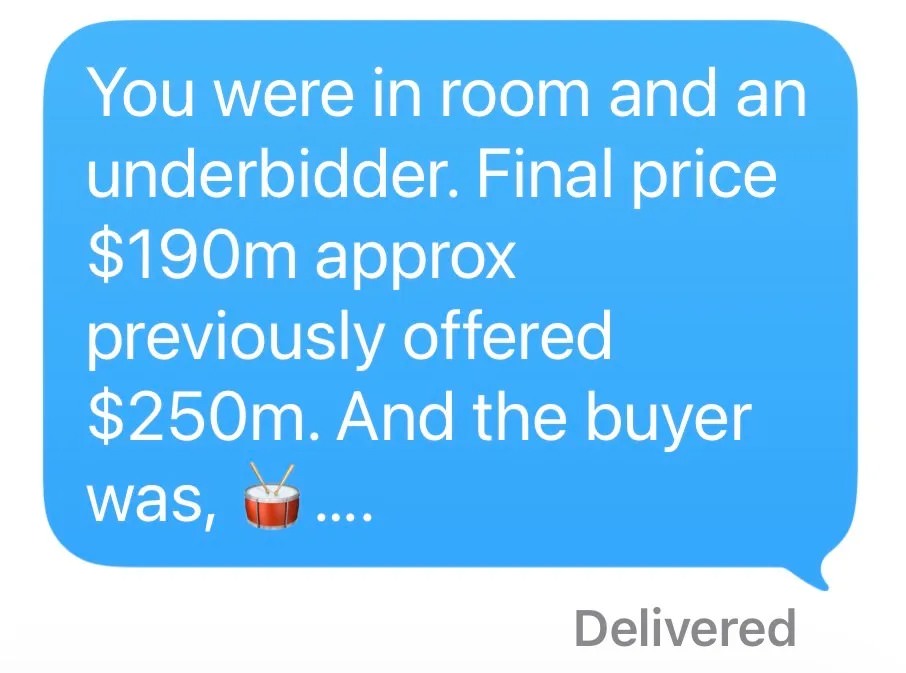
When all else fails, there’s always begging, pleading, and cajoling. There’s nothing I won’t stoop to. A day in the life of an art-market investigative reporter. Image courtesy Kenny Schachter
By the way, since 2011, the Nahmads have been embroiled in a dispute over Amedeo Modigliani’s 1918 painting Seated Man with Cane, allegedly stolen by the Nazis, which they bought in 1996 for $3.2 million, a fraction of what it’s worth today. Information that came to light in the Panama Papers helped enable Philippe Maestracci, the grandson of a French antiques dealer who once possessed the piece, to win an appeal in 2017 to revive the suit, which is finally scheduled to come before a jury in New York in May. So much for swift justice.
Representing the Nahmads is none other than my old friend, 83-year-old lawyer Richard Golub (Google our names together for a history of our well-documented skirmishes). They maintain that a different Modigliani was looted from Maestracci’s grandfather. Count me in for the role of Artnet junior court reporter.
I am self-aware enough to acknowledge that a significant portion of my writing (on the art market) is about as vital as the latest software updates for our phones and laptops, which we are led to believe are life-or-death imperatives. Needless to say, they rarely are, and instead relocate various buttons and invariably present an inane new garbage-can icon. In the end, they are yet more invasive intrusions into our privacy and data, and I rue the day I upgraded (and the time before that).
At the very least, one thing that A.I. can’t do (for now) is ferret and tease out info from those who are usually unwilling to talk. That means that I can continue to steal it from the rich to share it with the aspiring rich and, more meaningfully to me, the plainly curious.